Free Shipping on ALL orders over $25 in the USA

Why 36 mg of Cranberry PACs Matters for Urinary Tract Support
When people think of cranberry, they often think of cranberry juice. But when it comes to urinary tract support, the most important part of cranberry is not the sugar, tart flavor, or fruit powder. It is a group of naturally occurring cranberry compounds called proanthocyanidins, often shortened to PACs.
A 2024 systematic review and meta-analysis published in Frontiers in Nutrition looked closely at whether cranberry products with higher PAC content performed differently than lower-PAC cranberry products. The researchers reviewed randomized controlled trials that reported the PAC content of cranberry products and found an important pattern: cranberry products providing at least 36 mg of PACs per day were associated with a statistically significant reduction in UTI risk, while products with less than 36 mg of PACs did not show a statistically significant reduction.
Not All Cranberry Supplements Are the Same
One of the biggest takeaways from the review is that cranberry product quality matters. Many cranberry supplements contain cranberry powder, juice solids, or unspecified cranberry extract, but they may not clearly state how much PAC content they provide.
That distinction matters because the researchers noted that inconsistent results in earlier cranberry studies may be partly explained by differences in cranberry product composition, dosage, and standardization. In other words, “cranberry” on the label does not automatically mean the product provides the PAC level studied for urinary tract support.
CranCap was designed around this exact principle: a cranberry supplement should not leave you guessing. CranCap provides 36 mg of cranberry PACs per serving, the level highlighted in clinical research, and is made for simple once-daily urinary tract support.
Why PACs Are Important
PACs are naturally occurring compounds found in cranberries. They are believed to help support urinary tract health by promoting anti-adhesion activity, which means they may help discourage certain unwanted particles from sticking to the urinary tract lining.
The Frontiers review discusses research suggesting that PACs and their metabolites may play a role in urinary tract anti-adhesion activity. The authors also emphasized that a daily intake of at least 36 mg PACs has been associated with meaningful anti-adhesion effects in prior research.
This is why CranCap focuses on PAC content, not just cranberry content. A cranberry supplement can contain a large amount of cranberry powder but still provide a lower or unclear amount of active PACs.
The 36 mg Difference
In the Frontiers analysis, the researchers separated cranberry studies into groups based on PAC intake: less than 36 mg per day and at least 36 mg per day. The higher-PAC group showed an 18% reduction in UTI risk compared with control groups, while the lower-PAC group did not show a statistically significant reduction.
For consumers, this reinforces a practical point: when choosing a cranberry supplement, look beyond the front label. The most meaningful question is not simply, “Does it contain cranberry?” It is, “How much PAC content does it provide?”
CranCap answers that clearly with 36 mg PACs per serving.
Consistency Matters Too
The same review found that cranberry products showed significant results when used consistently over a 12- to 24-week period. That is another reason CranCap is designed as a once-daily capsule. Urinary tract support is not usually about a one-time serving. It is about building a simple, consistent wellness routine.
For many women, CranCap fits easily into a morning supplement routine, travel routine, or daily wellness plan.
CranCap: A Smarter Cranberry Supplement
36 mg cranberry PACs per serving
Once-daily urinary tract support
A standardized cranberry supplement
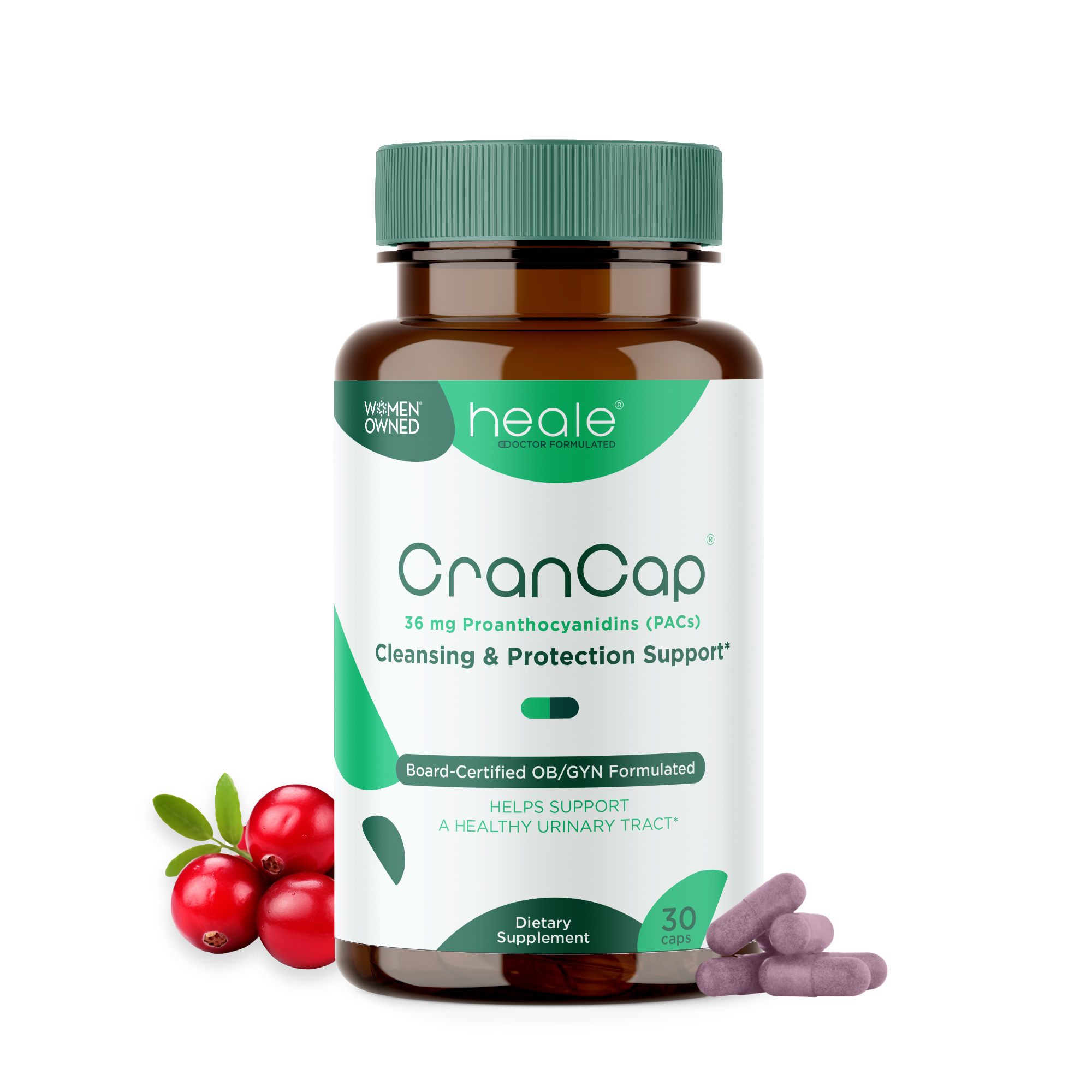
A simple capsule format without sugary cranberry juice
A routine-friendly option for women who want proactive urinary wellness support
Thousands of reviews from happy customers
The Bottom Line
Cranberry research continues to evolve, but the 2024 Frontiers review adds support to an important idea: dose and standardization matter. Cranberry supplements with at least 36 mg PACs per day showed stronger evidence than lower-PAC products in the analyzed studies.
That is the CranCap difference. It is not just cranberry. It is cranberry PAC support, clearly formulated at 36 mg per serving, designed for your daily urinary tract wellness routine.
Disclaimer: CranCap is a dietary supplement and is not intended to diagnose, treat, cure, or prevent any disease. If you have urinary symptoms, recurring concerns, are pregnant, nursing, or taking medication, consult your healthcare provider.
This website provides general educational information. It is not intended to be, and should not be used as, a substitute for medical treatment by a health care professional. We are not making a diagnosis of your condition or a recommendation about the course of treatment for your particular circumstances. You should never disregard or delay seeking medical advice because of what you have read on this website.
©2025 Copyright. All rights reserved